Is Florianópolis Safe? An Honest Guide for Travelers
Florianópolis is one of the safest state capitals in Brazil. Surveys based on Ministry of Health data put the city among the capitals with the lowest homicide rates, at about 10.7 per 100,000 residents in 2024, less than half the national average. For visitors, the most common risks aren’t violence but the ocean, the hiking trails, opportunistic theft and scams.
That doesn’t mean zero risk. Florianópolis has theft, the occasional robbery and areas you shouldn’t walk around at night, like any tourist city. This guide shows where the real risks are and how to avoid them.
The real risks at a glance
| Risk | Where and when | How to avoid it |
|---|---|---|
| Rip currents | Open-ocean beaches, especially without lifeguards | Swim near the lifeguard station, respect the flags |
| Hiking accidents | Lagoinha do Leste, rocky shores, trails after rain | Start early, wear the right shoes, never go alone |
| Theft on the sand | Crowded beaches in summer | Don’t leave your phone and wallet unattended |
| Phone theft and robbery | Crowds (New Year’s Eve, Carnival, concerts) and empty streets at night | Keep your phone put away, use a ride-hailing app to get back |
| Fake rental scam | Listings on social media and classifieds sites | Book and pay only through the platform |
| Summer storms | Late afternoons in the hot months | Follow Civil Defense alerts |
Ocean safety: the number one risk
Rip currents are the main cause of drowning on the Santa Catarina coast, according to the Military Fire Department (CBMSC), which is in charge of the lifeguards. They can pull a person from the shallows into deep water within seconds, even on days when the sea looks calm.
How to spot a rip current
- A stretch where the waves don’t break, or break less, between areas with surf.
- Darker water, or foam and debris moving out to sea.
- The spot is often already marked with a red flag by the lifeguards.
What to do if you get pulled out
- Don’t swim against the current toward the sand. Exhaustion is the danger.
- Stay calm and swim parallel to the beach until you’re out of the current.
- If you can’t, float and wave your arm to the lifeguard.
- See someone in trouble? Alert the lifeguard or call 193. Don’t go in to rescue them without training.
What the flags mean
| Flag | Meaning (CBMSC) |
|---|---|
| Green | Low risk, conditions suitable for swimming |
| Yellow | Moderate risk; not advised for weak swimmers |
| Red | High risk of drowning; don’t go in |
| Black | Station closed, no lifeguard on duty right now |
| Purple | Jellyfish present |
Lifeguard stations are fully staffed during the summer season (Operação Veraneio); outside it, many are closed or open only on weekends and public holidays. Off-season, choose calmer beaches and avoid swimming alone. Other precautions: don’t swim after drinking, stay away from the costões (rocky shores) and keep an eye on children at all times.
Water quality also changes from week to week. IMA, Santa Catarina’s environmental agency, publishes a bathing water quality (balneabilidade) report for the state’s beaches; it’s worth checking before you go.
Hiking safety
Florianópolis’s trails are beautiful and popular, but they’re tougher than they look. The Lagoinha do Leste trail, in the south of the island, has had the most incidents handled by the Fire Department in the Greater Florianópolis area since 2016, from sprains and falls to people getting lost at nightfall.
- Start early and plan to be back in daylight.
- Don’t go alone, and tell someone your route and when you expect to be back.
- Cell service drops out on several trails; download an offline map.
- Closed-toe shoes, water and a flashlight, even on short trails.
- Avoid trails after heavy rain: rocks and mud get slippery.
- In an emergency, call 193.
See the difficulty and duration of each route in our guide to hiking trails in Florianópolis.
On the street and at night
Tourist areas and nightlife spots such as the small center of Lagoa da Conceição, Avenida Beira-Mar Norte, the neighborhoods with bars and Trindade itself, which has a constant flow of students and University Hospital traffic, are calm with the usual big-city precautions:
- Use a ride-hailing app to get back late at night, instead of waiting for a bus alone or walking down empty streets.
- Avoid deserted beaches at night, especially on your own.
- Don’t follow GPS through hillside areas and communities you don’t know, especially at night; stick to the main roads.
- Keep your phone in your front pocket in crowded places, and don’t use it absent-mindedly at the curb.
- Leave nothing visible in your car: backpacks and bags go in the trunk.
At the beach: protect your belongings
The most common theft in Florianópolis is also the simplest: a backpack, phone or car key left on a beach towel while its owner is in the water. Bring only what you need, use a waterproof pouch for your phone, or take turns with whoever you’re with. Don’t accept offers from strangers to “watch your things.”
Common scams
Fake vacation rentals. This is the fastest-growing scam in summer. Scammers copy photos of real properties, list them below market price and ask for an upfront Pix (Brazil’s instant payment system) to “secure the booking.” Police data from Florianópolis show that most cases start on Facebook and classifieds sites. To avoid it:
- Book and pay within the platform (Airbnb, Booking) or through a well-known agency.
- Be wary of anyone who asks to move the conversation off the platform.
- A price far below market rate in high season is a red flag.
Card machines and Pix. Check the amount on the screen before tapping your card or entering your PIN, and check the recipient’s name before confirming a Pix.
If you’re a victim, file a police report (boletim de ocorrência). Many cases, such as phone theft and lost documents, can be reported online through the Delegacia Virtual (online police station) of the Santa Catarina Civil Police. Florianópolis also has a Tourist Protection Police Station (DPTur).
Weather: summer storms
In summer, quick late-afternoon storms are common, with strong winds and localized flooding. To get Civil Defense alerts by text message, send the CEP (postal code) of where you’re staying to 40199.
Emergency numbers
| Number | Service |
|---|---|
| 190 | Military Police |
| 192 | SAMU (ambulance) |
| 193 | Fire Department (including ocean and trail rescues) |
| 199 | Civil Defense |
Calls are free and work from any cell phone. Emergency care in the SUS, Brazil’s public health system, is available to everyone, including foreigners. If you’re coming from outside Brazil, see also our Florianópolis travel tips for foreigners.
Crowded dates
On New Year’s Eve and during Carnival, Florianópolis receives a lot of people all at once. That’s when phone theft is most common and traffic is at its worst. Bring only the essentials, agree on a meeting point with your group and plan your way home. There are more tips in our guide to New Year’s Eve and Carnival in Florianópolis.
Trindade: a calm, convenient base
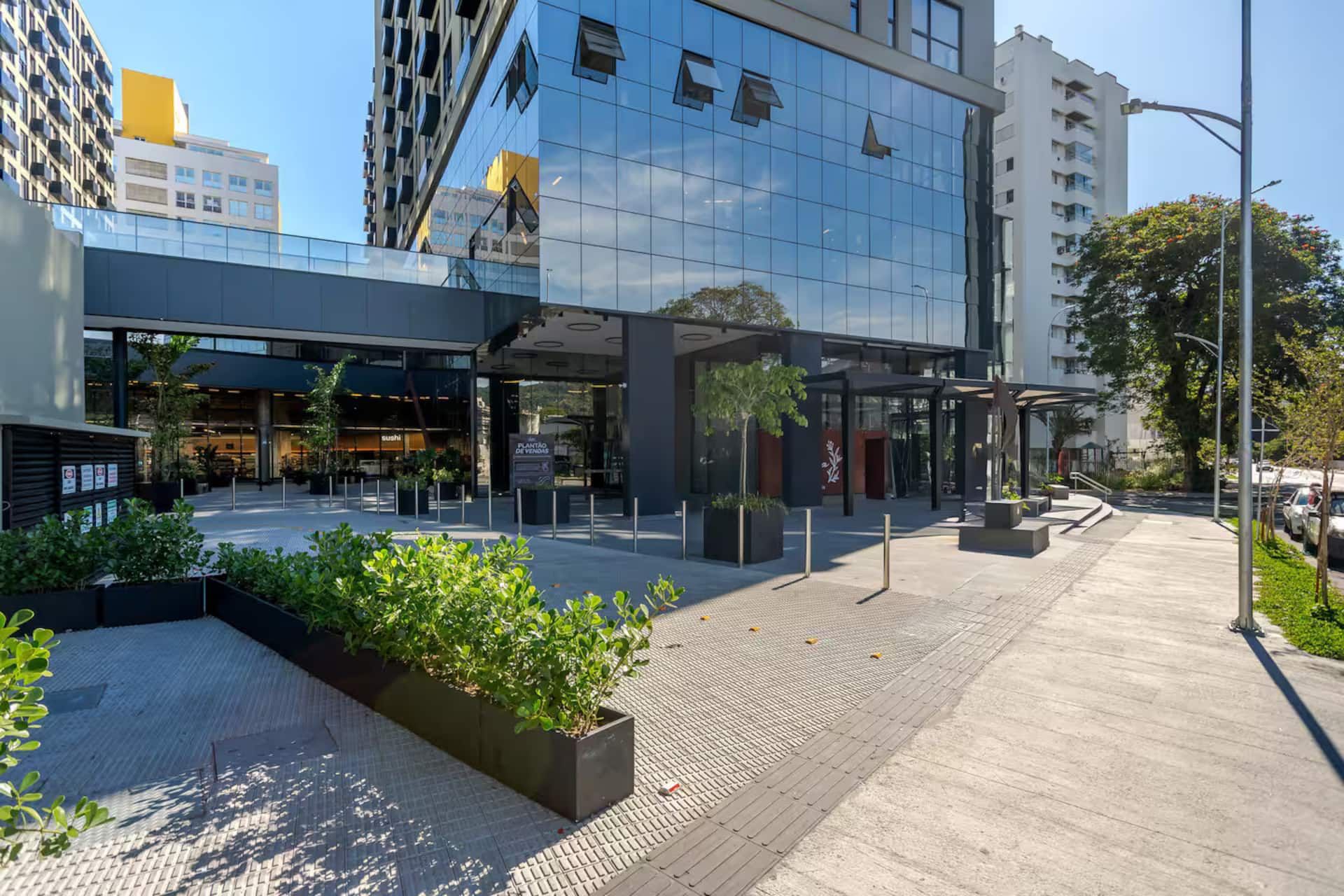
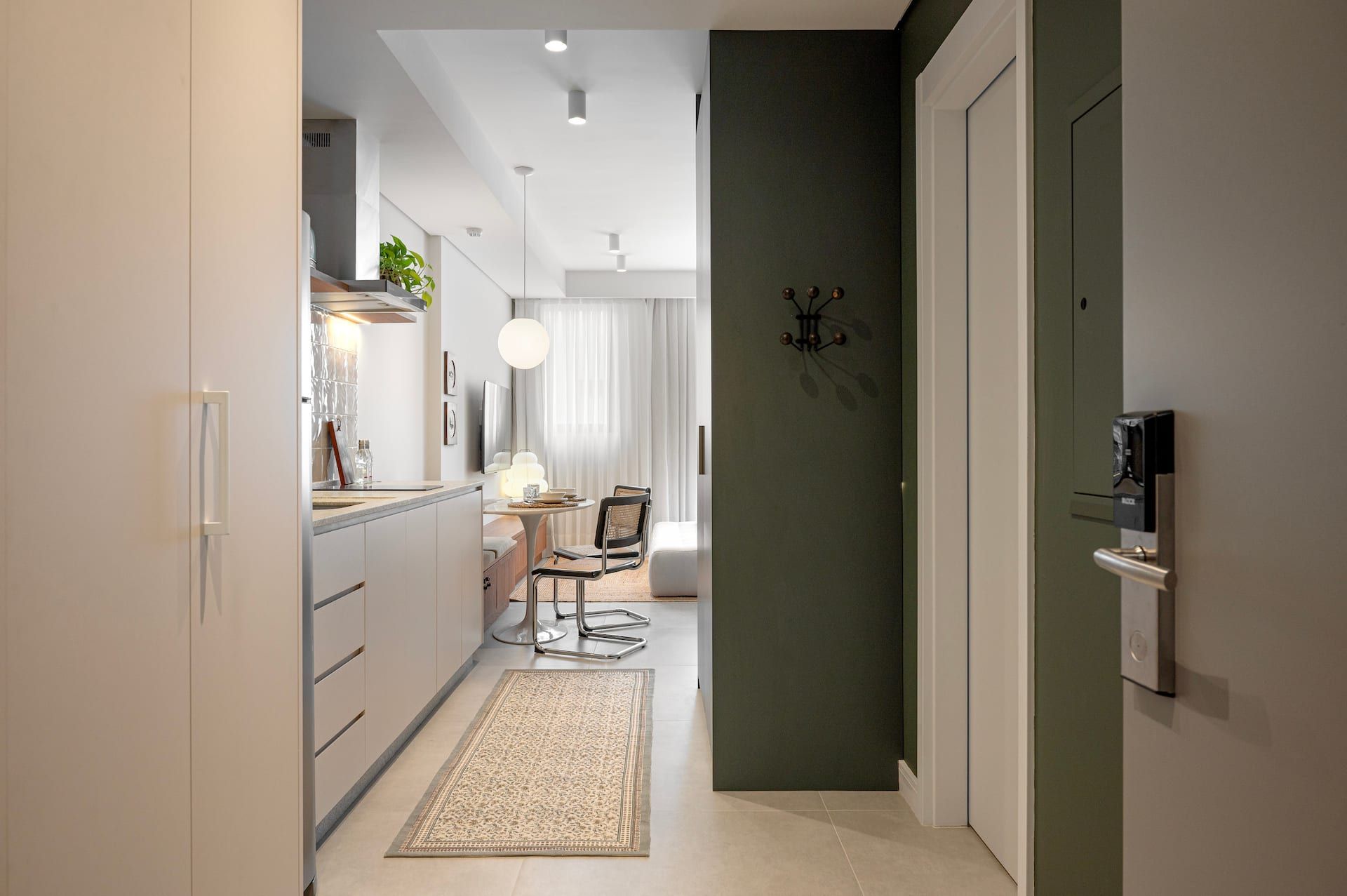
Trindade is a residential university neighborhood, with activity day and night thanks to UFSC (Federal University of Santa Catarina) and the University Hospital. Floripa Studio Trindade is in a complex with biometric access and an electronic concierge system, self check-in, and a supermarket, pharmacy and food court on the ground floor, which cuts down on trips out at night. From Trindade, Lagoa da Conceição and downtown are about 15 minutes away and the airport about 20 minutes, without traffic.
Frequently asked questions
Is Florianópolis a safe city for tourists?
Yes, compared with other Brazilian state capitals. Florianópolis has one of the lowest homicide rates among the capitals, but there is theft, the occasional robbery and scams, as in any tourist city. Basic precautions take care of most of the risks.
What is the biggest danger at Florianópolis beaches?
Rip currents, the main cause of drowning on the Santa Catarina coast. Swim near a lifeguard station, respect the red flags and, if you get pulled out, swim parallel to the beach instead of against the current.
Is it safe to go out at night in Florianópolis?
In busy areas such as the small center of Lagoa da Conceição, Trindade and the neighborhoods with bars, yes, with normal precautions. Avoid deserted beaches and streets late at night, use a ride-hailing app to get back, and don't follow GPS through hillside areas you don't know.
What are the emergency numbers in Florianópolis?
190 for the Military Police, 192 for SAMU (ambulance), 193 for the Fire Department, including ocean and trail rescues, and 199 for Civil Defense. Calls are free.
How do you avoid the fake rental scam in Florianópolis?
Be wary of prices far below market rate and of requests for an upfront Pix payment to an individual. Book and pay through the platform itself (Airbnb, Booking) or through a well-known agency, and never close a deal only over WhatsApp or social media.
More guides
Florianópolis Travel Tips for Foreigners: A Practical Guide
A practical guide for foreign visitors to Florianópolis: entry documents, Pix and cards, SIM and eSIM, Uber, language, tipping, 220V outlets and driving.
Read guide →
New Year's Eve and Carnival in Florianópolis: Where to Go
New Year's Eve and Carnival in Florianópolis: where the parties are, fireworks on Beira-Mar and the Hercílio Luz bridge, street parties, parades and traffic.
Read guide →
Where to Stay Near UFSC: A Guide to Accommodation in Trindade
Visiting UFSC for an exam, conference, enrollment or exchange? Here's why Trindade is the best neighborhood to stay in and what to look for.
Read guide →